

Call us now
07971549969
Call us now
07971549969
Caltech India offers BGD 509 Pendulum Hardness Tester A pendulum resting on a coating surface is set into oscillation and the time for the oscillation amplitude to decrease by an amount specified in this International Standard is measured The shorter the damping time the lower the hardness
Two test procedures are considered in some detail namely those of Knig and Persoz The Persoz and Knig methods differ by the period and amplitude of the oscillation The Persoz test measures the time taken for the amplitude of oscillation to decrease from 12 to 4 the knig from 6 to 3
The instruments embody the same principle that the amplitude of oscillation of a pendulum touching a surface decreases more rapidly the softer the surface but differ in respect of dimensions period and amplitude of oscillation
BGD 509 Pendulum Hardness Tester is the newest product which can be used in accordance with the following National and International Standards ISO 1522 which supersedes ASTM D4366 BS 3900 E5 DIN 53157 NBN T22105 NF T30016
Its a simple to use instrument and can be supplied in one of three model types Persoz knig Persoz and Knig combined
Versatile and Reliable Hardness Testing
The Pendulum Hardness Tester offers both Konig and Persoz methods providing flexibility for various industry standards The instruments adaptable configuration caters to different coatings and substrates making it suitable for paint lacquer and varnish film assessments Its stable antivibration design ensures highly reliable results
Precision Engineering Meets Practical Design
With a corrosionresistant body comprising stainless steel glass and aluminum the tester is built for durability Integrated leveling antislip pads and easytouse manual controls ensure accurate and repeatable tests Manual observation on an analog dial provides straightforward measurement while included accessories support calibration and maintenance
Ready for Laboratory and Field Use
Supplied in a robust protective case the tester is suited for use across India by manufacturers service providers and professionals It requires no power supply and operates efficiently at temperatures between 10C and 40C making it convenient for diverse working environments Immediate setup and universal use are assured
FAQs of Pendulum Hardness Tester
Q How does the Pendulum Hardness Tester evaluate coating hardness
A The tester measures the time it takes for a pendulum to oscillate and decay between specified angles when placed on a film such as paint or lacquer Using either Konig or Persoz methods oscillation time indicates the films surface hardness longer damping times reflect harder coatings
Q What is the process for setting up and using the instrument
A Place the test panel minimum 100x100 mm thickness 03 mm on the antislip sample platform Use the builtin leveling feet and bubble level to ensure the tester is horizontal Select and install the required pendulum Konig or Persoz release using the precision latch and start measuring the oscillation time via the analog dial
Q When should I use the Konig versus the Persoz pendulum
A Choose the pendulum type based on your coating material and the industry standard you follow The Konig method starts at a 12 angle and suits certain European standards while Persoz starts at 6 and fits others Both pendulums are interchangeable depending on test requirements
Q Where can this hardness tester be used
A It is ideal for laboratories manufacturing facilities or any quality control setting in India focused on paint lacquer or varnish coatings Its tabletop design and robust protective case make it easy to deploy in different environments including field or site work
Q What benefits does this tester provide over electronic models
A With manual operation the tester requires no power supply eliminating downtime due to power issues The analog system ensures no dependency on language software or electronic calibration Its immediate response time robust build and straightforward use deliver reliability and ease for routine testing
Q How do I maintain the accuracy of the instrument
A Regularly use the provided adjustment tools and spare glass plates for cleaning and setup Factory calibration is provided with certification periodic checks following the instruction manual ensure continued accuracy Store and transport the instrument in its protective case to prevent damage
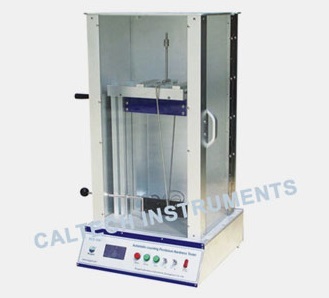

Price:
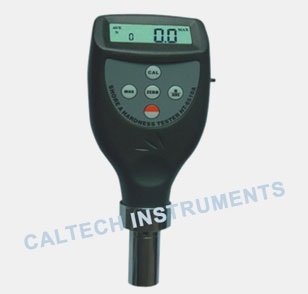
Price 50 INR / Unit
Minimum Order Quantity : 1 Unit
Power Supply : No external power required (manual operation)
Measurement Range : 0 100 Shore (A, D etc. as per type)
Display Type : Other, Analog dial
Resolution : 1 Shore unit
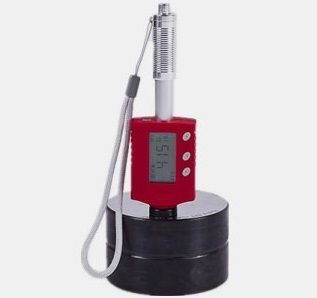
Price 50 INR / Unit
Minimum Order Quantity : 1 Unit
Power Supply : 2 x 1.5V AA (Alkaline) batteries
Measurement Range : 170 to 960 HLD
Display Type : Other, LCD with backlight
Resolution : 1 HLD
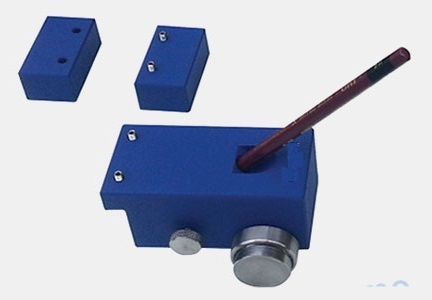
Price 50 INR / Unit
Minimum Order Quantity : 1 , , Unit
Power Supply : Not required (Manual operation)
Measurement Range : 6B to 9H (Standard pencil grades)
Display Type : Other, Analogue (No digital display)
Resolution : 1 grade increment
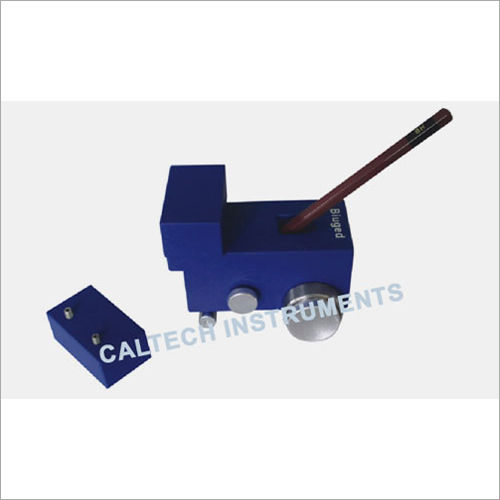
Price 50 INR / Piece
Minimum Order Quantity : 50 Pieces
Power Supply : Not Required (Manual Operation)
Measurement Range : 6B 9H
Display Type : Other, Analog (Visual Inspection)
Resolution : 1 Hardness Step (Based on Pencil Grade)





 Send Inquiry


 Send Inquiry


 English
 Spanish
 French
 German
 Italian
 Chinese (Simplified)
 Japanese
 Korean
 Arabic
 Portuguese